Browse Items (4207 total)
Sort by:


Museum Catalog Entries

Each specimen in the Dental Museum was assigned a serial number and cabinet and shelf location. Sheets like these were used to record information about the item and its acquisition and were then bound together into formal catalogs.
Report of the Case of John W. Webster

During the trial of John White Webster, Nathan Cooley Keep was called to identify the dental remains which were found in the basement of Harvard Medical School. Here Keep outlines the distinctive peculiarities of the teeth and lower jaw and…
Recipes of Bodies for Artificial Teeth

Dr. William Parker Cooke (HDS 1881) compiled these various recipes for the composition of artificial teeth from notable dental practitioners, including Thomas H. Chandler, Daniel Harwood, and Samuel F. Harris.
The Mirror

From 1912 until 1943, the Dental School had its own yearbook, The Mirror, analogous to the Medical School's yearbook, The Aesculapiad. The 1925 edition describes the Dental Museum and its holdings and includes photographs of the interior and the…
Letter from C. O. Cone to B. Palmer

The Dental Museum acquired and displayed manuscript and archival items, books, and photographs related to the history of the school and the profession of Dentistry. The letter from Dr. C. O. Cone, demonstrator of mechanical Dentistry at the…
Announcement of the Dental School of Harvard University, Session 1868-69

This first annual catalog from the Dental School lists the faculty members and outlines the course of instruction. Among the qualifications for graduation may be seen the earliest reference to the existence of the Dental Museum: "He must also deposit…
World's Largest Tooth Now Owned by Harvard

In 1929, Boston newspapers ran some unusual articles on the latest acquisition of the Dental Museum. This was no human Tooth, but a mastodon's tusk estimated to be 50,000 years old. Over 11 feet long and weighing 300 pounds, it was one of the…
The Museum of the Harvard Dental School

George Howard Monks, the professor of oral surgery in the Dental School, presented an overview of the Dental Museum and its holdings to the Boston Medical History Club in March, 1925. The paper was then printed in the Harvard Alumni Bulletin and…
Catalogue of the Specimens in the Museum of the Harvard Dental School

This volume functioned as an accession book for specimens acquired by the Museum through 1896. Items were assigned an ordinal number and shelf location as received, and the information was later transcribed into the formal catalog. The items listed…
Catalog entry for Oliver Wendell Holmes denture

This version of the Museum's catalog was in use from the 1890s through 1907.
Here among the entries for items of mechanical dentistry are specimens 1562 and 1565
Here among the entries for items of mechanical dentistry are specimens 1562 and 1565
A List of a Few of the Attractions of the Museum

A brief overview of some of the highlights of the Dental Museum collection indicates the scope and breadth of the collection.

Facial Moulages

During World War I, Dr. Varaztad H. Kazanjian (1879-1974) used his surgical skills to treat the soldiers severely disfigured during combat. In 1915, he was appointed chief dental officer of the First Harvard Unit, organized to serve overseas with the…
Preparation of Dental Fillings

Another student piece illustrates the various techniques and compounds which could be used for filling teeth. There are twenty-nine dental preparations in a glass dome on a wooden base. The teeth are mounted on two gold arches.
Dissected Superior and Inferior Maxillary Bones

This specimen of dissection shows arrested development of the permanent teeth.
The specimen is of dissected superior and inferior maxillary nones showing arrested development of permanent tooth germs, natural absorption of roots of temporary…
Scaler

This instrument was part of an ornamental set of scalers, mirrors, and a turnkey belonging to Thomas B. Hitchcock, former Dean of the Dental School.
Casts of the Superior and Inferior Maxillae of George Parkman

These are the most historically significant specimens in the Dental Museum's collection
Charriere Pocket Surgical Instrument Case

This complete portable surgical kit was used during the Civil War.
Collection of Sturgeons' Teeth

In addition to its human specimens, the Dental Museum had a rich collection of skulls, jaws, and teeth from animals and fish to illustrate principles of comparative odontology.

Diminutive Supernumerary

This supernumary tooth was removed from the jaw of an 11 year old boy; the rest of his teeth were very large.


Instruments of Daniel Harwood

These ivory-handled instruments (an excavator, scaler, chisel, and three mirrors) were used by Boston dentist Daniel Harwood (1801-1881). Soon after the formation of the Harvard Dental School in 1867, Harwood was appointed to the professorship of…
Flexible Chain Saw

Dr. Thomas Fillebrown (1836-1908) was a graduate of the first class of the Dental School in 1869 and later held the professorship of operative Dentistry and oral surgery. He donated many specimens and instruments to the Dental Museum.
Turnkey and Elevator

The turnkey (for extracting teeth) and the elevator (for extracting roots) were essential early dental instruments. These were used by Dr. George Brewster of Portsmouth, New Hampshire.
In "The Claims of Dentistry," an address at the 1872…

Superior denture/model with gold restorations

F. H. Veo was a dental graduate of the Class of 1897. This specimen is almost certainly the student piece he created as part of the requirements for graduation and then deposited in the Dental Museum.
A Treatise on the Management of the Teeth

In addition to the collection housed in the library of the Dental School, there were also books, pamphlets, prints and pictures preserved in the Dental Museum, including this early text on Dentistry. The title-page engraving shows an inferior denture…
Antique Dental Office

During his tenure as curator, Adelbert Fernald assembled a replica of an early 19th century dental office, based on that of Boston practitioner Dr. John Randall (1774-1843).
The Harvard Dental School Museum

The only surviving photographs of the interior of the Dental Museum are found in issues of The Mirror, the yearbook of the Dental School, and Richard Locke Hapgood's published History of the Harvard Dental School (1930). This photograph is from the…


Arthur T. Cabot

Dr. Arthur T. Cabot (1852-1912) was the first curator of the Dental Museum, serving from 1879 to 1881.
Charles Wilson

Dr. Charles Wilson (1842-1912) was the curator of the Museum from 1881 until 1891. Wilson was also part of the class of 1870.
Waldo E. Boardman

Dr. Waldo E. Boardman (1851-1922) was the Museum's third curator, serving over thirty years, from 1891 until 1922. Boardman was also part of the class of 1886.
Adelbert Fernald

The Museum's fourth curator, Dr. Adelbert Fernald (1871-1958), was in office from 1922 until his retirement in 1936 .

Thomas Fillebrown

Dr. Thomas Fillebrown (1836-1908) was a member of the first class to graduate from the Harvard Dental School and later held the professorship of Operative Dentistry and Oral Surgery. He was an ardent supporter of the Dental Museum and donated many…
The Harvard Dental School and Dental and Oral Hospital

This photograph depicts the exterior of the Dental School building on North Grove Street during the period when the Museum was housed on its second floor. Ironically, the remains of George Parkman were discovered in the basement of this building in…


Turnkey from New Hampshire

This key instrument was carried to a town in New Hampshire when it was settled 100 years ago as part of the necessary articles to have for use in a new country . The donor received it from the descendents of the owner.


Rhythmeter

Rock became the Director of the Free Hospital for Women’s Sterility Clinic in 1926. At the Free Hospital, Rock saw many infertile women who were eager to have children. Some of his patients, however, sought the means to control conception. For these…
The Free Hospital for Women

The hospital was the focal point of Rock’s early career and provided him with the needed participants to conduct his various research trials. His infertility studies here would later provide crucial information concerning the effects of hormones on…

Senior Staff Group

The Free Hospital’s Chief Surgeon, William Graves, and his successor, Frank A. Pemberton, assembled a strong staff of clinical researchers: from left: George V. S. Smith, who with his wife Olive, proposed uses for the synthetic estrogen, DES; John…


Fertilized Egg

Another project was under way at the same time by Rock and Miriam Menkin that focused on in-vitro fertilization. Gregory Pincus had previously performed successful in-vitro fertilization studies with rabbits earlier in his career at Harvard. The…
Miriam Menkin with her daughter Lucy

With Miriam Menkin, Rock paved the way for the million-plus children since conceived through in vitro fertilization. With eggs harvested from consenting women having hysterectomies, Menkin fertilized the first egg in vitro in 1944.
Gregory “Goody” Pincus

Pincus is among the leaders at the International Growth Symposium at Purdue University. (Left to right: Dr. Gregory Pincus, President Frederick L. Houde, Dr. T.H. Jukes, and Dr. K. Knobil.)
Clarence J. Gamble

Gamble was a key advocate for family planning and worked with the Birth Control Federation and Planned Parenthood Federation to create global awareness regarding the benefits of contraceptives for the individual, family and community.

A Discourse upon the Institution of Medical Schools in America

The first book to be published on medical education in America was written by Dr. John Morgan, who founded the Medical Department of the University of Pennsylvania, the nation’s first medical school, in 1765. This particular copy is notable for…
Will of Ezekiel Hersey

In his will, Hingham physician Ezekiel Hersey bequeathed £1,000 to the Harvard Corporation to fund a professorship in anatomy and physic [physiology]. Although it took some years for the Corporation to establish a program of medical study, in…
The Independent Chronicle and the Universal Advertiser

This local newspaper was one of the first to report the formation of the Harvard Medical School following the plan devised by Dr. John Warren for the Harvard Corporation. The article announces the appointment of the first three faculty members and…
Lectures upon Anatomy
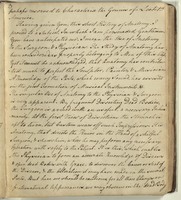
Partially in the handwriting of Dr. John Warren, this volume of lecture notes, beginning on December 10, 1783, contains the earliest surviving record of teaching at Harvard Medical School. The lectures were delivered in Harvard Hall, on the campus in…
Letter to George H. Hall

In 1788, John Fleet and George Holmes Hall became the first two graduates to receive medical degrees from Harvard. Here, in the following year, the two are in correspondence concerning treatment of several of their patients.
Mémoires de la P. de Sales Laterrière et de Ses Traverses

Pierre Laterrière, who first studied medicine under M. de la Rochambeau in France, came to Harvard and received the degree of Bachelor of Medicine in 1789. He went on to practice medicine in Canada. Laterrière’s Mémoires,…
Annual Circular

This first circular from the new location advertises the opportunity for students to examine patients at the Boston Almshouse on Leverett Street and announces the new professorship in clinical medicine.
The faculty was also concerned about the cost…
Report of the Select Committee of the House of Representatives ... Legalizing the Study of Anatomy

This state report provided key arguments for the repeal of the 1815 Act to Protect the Sepulchres of the Dead by the Massachusetts Legislature and so legalized dissection of human bodies for anatomical study. Dr. John Collins Warren, stressing the…
A Syllabus of the Lectures Delivered at the Massachusetts Medical College to the Medical Students of Harvard University

Harvard’s first professor of clinical medicine, James Jackson, found that the time spent with his students on the wards at Massachusetts General Hospital detracted from his formal lecturing, and so he published these brief notes of his lectures…
Medical Lectures

Dr. John George Metcalf of Mendon attended Harvard Medical School and used this notebook during the lectures of Drs. John Collins Warren, Jacob Bigelow, and Walter Channing. The notebook also served as Metcalf’s diary, and his account of life at…
Some Account of the Medical School in Boston, and of the Massachusetts General Hospital

This brief promotional pamphlet describes the Harvard Medical School at its Mason Street location and also the clinical and surgical opportunities offered by the new Massachusetts General Hospital. The school and hospital both at this period would…
First and Second Year in Medical School

Harvard professor James C. White was also a graduate of the Medical School. In 1898, at a meeting of the Vienna Club, he read these extracts from a diary he kept while at Harvard from 1853 until 1855. His entry for October 8, 1853, notes, “Many…

Notes on Lectures at Harvard Medical School

Although he never practiced as a physician, William James—philosopher and psychologist best known for The Varieties of Religious Experience(1902)—received a degree from Harvard Medical School in 1869 and taught physiology during the…
Glances and Glimpses, or Fifty Years Social, Including Twenty Years Professional Life

Harriot Kesia Hunt
Medical Education : New Professorships in the Medical Department of Harvard University

The challenge to reform American medical education and bring it closer to the higher standards current in Europe started even before this editorial appeared in the Boston Medical and Surgical Journal. James C. White, a member of the faculty of the…
An Introductory Lecture Delivered before the Medical Class of Harvard University

Introductory lectures to new medical students were customary at the opening of each academic year and often printed in pamphlet form or, as here, in the pages of a medical journal. James C. White cautions the students against specializing too early…
Letter from Charles Eliot to Calvin Ellis

In this letter to Calvin Ellis, the dean of Harvard Medical School, President Eliot outlines several key factors in his proposed educational reforms: a three-year course sequence; examinations, partly written, in each department; familiarity with…
88th Annual Announcement

This broadside issued following President Charles W. Eliot's educational reforms outlines the revolution in Harvard's medical curriculum. The academic year now begins earlier, three years' study is required, and the importance of practical and…
Course Schedule

As part of the reform movement at Harvard, the recommended medical degree course was extended from three years to four in 1880. Students could still finish the requirements for an M.D. in three years, and anyone who completed a fourth was granted the…
Harvard and Its Surroundings

This 19th century guidebook to Harvard University describes the current—and overcrowded—conditions of the Medical School on North Grove Street as well as some of the collections of the Warren Anatomical Museum. A building on Cambridge Street was…
Reminiscences

At the time of his death, Dr. Alfred Worcester—a member of the Harvard College Class of 1878—was the University’s oldest living graduate. He was also an 1883 graduate of the Medical School. In the 1940s, Dr. Worcester composed his…
Examination Papers in Medicine : First, Second and Third Year

Following reform, rigorous medical examinations at the end of each year became a requirement for Harvard students. These are the exam questions posed by Dr. John P. Reynolds to third-year students in obstetrics during the 1877-1878 academic…
Student Lecture Notes on Anatomy

Even the most renowned of neurosurgeons was once a first-year medical student, as illustrated by this volume of Harvey Cushing's notes on the anatomical lectures of Thomas Dwight. The Harvard Medical School student at this period attended anatomy…
Mason Street Building

The Harvard Corporation, at the instigation of the Medical Faculty, petitioned the Massachusetts state legislature for funds to build an adequate home for the Medical School. The Faculty received a grant of $18,000 to obtain land and erect the first…
The North Grove Street Building

In 1847, Harvard Medical School erected a new building, on North Grove Street, adjoining Massachusetts General Hospital, on land donated by Dr. George Parkman—whose body would all too soon be found buried beneath it. The school building itself…


The Parkman Murder : Trial of Prof. John W. Webster for the Murder of Dr. George Parkman

While few early photographs exist of the Harvard Medical School building on North Grove Street, considerable information about the structure and its interior can be found, ironically, in the published transcripts of the 1850 murder trial of John W.…
Description of the Physiological Laboratory

A large proportion of the new building on Boylston Street was devoted to laboratory space with adequate natural light. The Physiological Laboratory (“… intended to serve primarily as a laboratory of research, and secondarily as an…
Trial of Professor John W. Webster for the Murder of Doctor George Parkman

While few early photographs exist of the Harvard Medical School building on North Grove Street, considerable information about the structure and its interior can be found, ironically, in the published transcripts of the 1850 murder trial of John W.…
Robert Tanner Freeman

Part of a set of photographs of members of the first graduates of the Harvard Dental School, this image of Robert Tanner Freeman (d. 1873) is particularly interesting. Dr. Freeman was born in Washington, D.C., and was the son of former slaves from…
George Franklin Grant
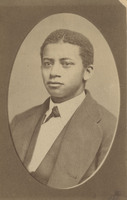
Dr. George Franklin Grant (1847-1910) of Oswego, New York, received a degree from the Harvard Dental School in 1870 and then joined the faculty as an authority on mechanical dentistry. He was the first African-American faculty member at the…

Holden Chapel

Students attended lectures in the basement of Harvard Hall, but by 1797, the condition of this facility was described—at least for Aaron Dexter's lectures on chemistry—as "unhealthy, inconvenient, and disgraceful," and new space was then provided in…

Admission Ticket to a lecture at Harvard Medical School

The use of admission tickets for each course of a medical student’s education was common until the late 19th century. Students paid the lecturer or professor directly and were then issued these passes for an academic session. This particular…
