
Browse Items (4207 total)
Sort by:
Moreno, J. L. (Jacob Levy), 1889-1974. Papers, 1906, 1911-1977. Index.
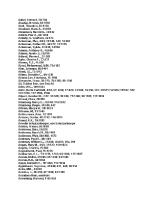
An index of correspondents for the Jacob L. Moreno papers. People with whom Moreno corresponded are listed in alphabetical order, followed by the box and folder number where the correspondence can be found.
Christian, Henry A. (Henry Asbury), 1876-1951. Papers, 1876-1951. Index.
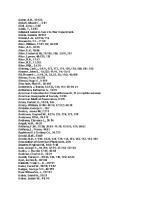
An index of correspondents for the Henry A. Christian papers. People and organizations with whom Christian corresponded are listed in alphabetical order, followed by the box and folder number where the correspondence can be found.
Walter, Carl Waldemar, 1905-. Papers, 1933-1992, 1996. Index.
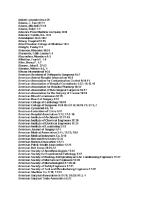
An index of correspondents for the Carl W. Walter papers. People and organizations with whom Walter corresponded are listed in alphabetical order, followed by the box and folder number where the correspondence can be found.
Cannon, Walter B. (Walter Bradford), 1871-1945. Papers, 1873-1945, 1972-1974 (inclusive), 1881-1945 (bulk). Index.
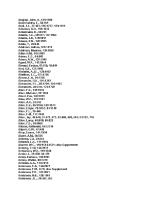
An index of correspondents for the Walter B. Cannon papers. People and organizations with whom Cannon corresponded are listed in alphabetical order, followed by the box and folder number where the correspondence can be found.
White, Paul Dudley, 1886-1973. Papers, 1870s-1987: Finding Aid. Index.
An index of correspondents for the Paul Dudley White papers. People and organizations with whom White corresponded are listed in alphabetical order, followed by the box and folder number where the correspondence can be found.
Wright, Louis T. (Louis Tompkins), 1891-1952. Papers, 1909-1997 (inclusive), 1919-1953 (bulk): Finding Aid, 2023 January 26.

"The finding aid for the Louis T. Wright papers underwent a significant revision in 2023 as a product of collection re-processing. This is a copy of the now-deprecated finding aid that is being maintained for transparency around the descriptive…
Boyle apparatus / British Oxygen Company

Henry E. G. Boyle, OBE, FRCS, DA (1875-1941) introduced this anesthesia machine in 1917. It was a modification of the American-made Gwathmey-Woolsey apparatus. It was so successful that it remained in production for fifty years. It could administer…
Laryngeal Mask Airway (LMA), contemporary example

The LMA (Laryngeal Mask Airway) was first introduced in 1988. It is an airway device designed to rest upon the vocal cords rather than passing through, presenting less risk of vocal cord damage.
Endotracheal Tube, Contemporary

A modern example of a cuffed endotracheal tube. A cuff is inflated in the patient’s airway through the small side tube. Once inflated it helps to prevent aspiration and blocks air from flowing around the tube.
Murphy Style Endotracheal Tube

In 1941, Dr. Francis J. Murphy (1900-1972), had some new design ideas for the simple endotracheal tube. He described both straight and curved tubes with holes on the side that act as emergency vents should the primary end opening become clogged. This…
Foregger Laryngeal Speculum, Miller Style

This example is an early improvement to the Miller designed straight-bladed laryngoscope. Richard Foregger’s version included a collapsible blade. His idea was granted a patent in 1942.

Macintosh Style Laryngoscope with Quick Screw Base

The blade of this laryngoscope is detachable from the body by a quick screw fitting into a threaded recess in the body allowing fast blade size changes. This example includes a 150mm blade (large adult) and a 120mm blade (adult medium).
Alaris IVAC Signature™ Pump (US Patent 4898576)

Commercial product derived from an invention by James Philip, ME, MD
Waters To-and-Fro CO2 Absorber

Within anesthesia machines, delivery of the anesthetic to the patient’s airway is the job of the “breathing system” which incorporates a mask or a tracheal tube. Dr. Ralph Waters (1883–1979) introduced this simple device in 1923 designed to prevent…
Ohio No. 8 Vaporizer

A standard vaporizer on the popular Kinet-O-Meter anesthesia machines created by the Ohio Chemical and Manufacturing company from the 1930s through the 1960s, the Ohio No. 8 vaporizer improved the Boyle Bottle by adding a control dial for pushing the…
Copper Kettle Vaporizer

In the late 1940s Lucien Morris' design, called the "Copper Kettle" was the first vaporizer to deliver a precise concentration of any volatile vapor to the patient. By using copper, a good heat conductor, it maintained near-constant temperature, and…
Fluothane® Vaporizer

This variable bypass vaporizer was the first to allow the anesthetist to directly set the percentage of anesthetic agent with a dial. The British Cyprane Company produced the Fluotec® vaporizer (commercial name Fluothane®) in the late 1950s to be…
Boyle Bottle

Henry Boyle devised a portable anesthesia machine in 1917 incorporating the “Boyle Bottle” for vaporizing any liquid anesthetic. A glass bottle was used as a vaporizing chamber.
Vaporizers

Anesthesia vaporizers were designed to help provide accurate amounts of anesthetic gas to the patient. Clockwise: Ohio No. 8 Vaporizer, circa 1940s; Copper Kettle Vaporizer, circa 1950s; Fluothane® Vaporizer, circa 1950s; and Boyle Bottle, circa…
Jess Bernard Weiss, MD

Jess Bernard Weiss (1917-2007) was the Anesthesiologist-in-Chief at Brigham and Women's Hospital predecessor institution, Boston Lying-in Hospital/Boston Hospital for Women, from 1961 to 1981, and was vice chairman of the Department of Anesthesia at…
Title page of 1954 JAMA Spinal Anesthesia Article
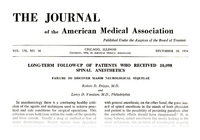
Title page of the December 18, 1954 Journal of the American Medical Association article by Robert D. Dripps, M.D and Leroy D. Vandam, M.D. "Long-Term Follow-up of Patients Who Received 10,098 Spinal Anesthetics. Failure To Discover Major Neurological…
Spinal Anesthesia Needle

This gold lumbar puncture needle was framed and given as a memento to Leroy Vandam by AB Stearns around 1972. Why a gold needle? Dr. Vandam referred to gold as “anti-infection.” The Becton Dickinson Catalog of 1927 shows gold versions of their…
Ether Squibb

Edward Robinson Squibb developed a method for the distillation of ether and founded a company in 1858 to sell his eponymous product for surgical anesthesia. The drop ether method was widely used when anesthesia machines were unavailable. Ether was…
Gertrude Gerrard, RN

Nursing school graduation photograph of Gertrude Gerrard, RN, Gerrard was Chief Anesthetist at the Peter Bent Brigham Hospital from 1919 to1947. In the first half of the 20th century the administration of anesthetics was largely entrusted to…
Modification Inhaler of Skinner and Charriere, of Paris

A wire frame with a muslin cover is placed over the patient's face; drops of chloroform are being administered onto the cover. The wire frame without cover is shown on the left.
Ether/Chloroform Mask

Modified Esmarch (style 1877) ether/ chloroform mask, Masque de Demarquey, by French manufacturer Mathieu. The folding frame was intended to make the mask adjustable over diverse facial anatomy. Masks like these were covered with a gauze cloth, then…
Inner view of room size respirator, 1932.

Inner view of room size respirator in the basement of Infant's Hospital. Arranged so that nurses had direct access to patients, 1932.
Outer view of room size respirator, 1932

Outer view of room size respirator in the basement of Infant's Hospital. Capacity: 5 patients 1932
Phillip Drinker Testing the Second Respirator, 1928

This is the first respirator ever made for clinical use being tested on the roof of the Harvard School of Public Health in 1928. It was utilized for the first time on October 12, 1928 at Children’s Hospital, Boston to successfully restore breathing…

Emerson Respirator 1946

Photograph of the Emerson Respirator in Use, 1946
Testing the second Drinker Respirator, 1928

This is the first respirator ever made for clinical use being tested on the roof of the Harvard School of Public Health in 1928. It was utilized for the first time on October 12, 1928 at Children’s Hospital, Boston to successfully restore breathing…
Phillip Drinker's First Respirator Demonstration, May 27, 1927 (4 of 4)

May 27, 1927: After Phillip Drinker’s and Louis Shaw’s successful laboratory and animal experimentation using positive and negative pressure to produce artificial respiration, Dr. Drinker tested the concept on himself on the roof of the Harvard…
Phillip Drinker's First Respirator Demonstration, May 27, 1927 (3 of 4)

May 27, 1927: After Phillip Drinker’s and Louis Shaw’s successful laboratory and animal experimentation using positive and negative pressure to produce artificial respiration, Dr. Drinker tested the concept on himself on the roof of the Harvard…
Phillip Drinker's First Respirator Demonstration, May 27, 1927 (2 of 4)

May 27, 1927: After Phillip Drinker’s and Louis Shaw’s successful laboratory and animal experimentation using positive and negative pressure to produce artificial respiration, Dr. Drinker tested the concept on himself on the roof of the Harvard…
Emerson Respirator “Iron Lung” serial number TC1, circa 1940s

The original “iron lung” respirator was designed by Phillip Drinker with Louis Agassiz Shaw at the Harvard School of Public Health. Its first clinical use occurred on October 12, 1928 at the Boston Children’s Hospital. The subject was an…
Doctor’s Birthing Kit

The objects inside this kit indicate that the original owner was probably an obstetrician who may have been a practitioner of Dämmerschlaf or “Twilight Sleep.” A combination of morphine, to mitigate pain, and scopolamine to cause amnesia, was given…
Ether/Chloroform Mask

Modified Schimmelbusch (style 1889) ether/chloroform mask. Masks like these were covered with a gauze cloth, then placed over the patient’s mouth and nose, while drops of either chloroform or ether were applied to the cloth until the patient became…
Phillip Drinker's First Respirator Demonstration, May 27, 1927 (1 of 4)

May 27, 1927: After Phillip Drinker’s and Louis Shaw’s successful laboratory and animal experimentation using positive and negative pressure to produce artificial respiration, Dr. Drinker tested the concept on himself on the roof of the Harvard…
Dual earpiece, teaching stethoscope, circa 1960s

This teaching stethoscope has one chest piece and two sets of binaural joined together to allow two people to listen simultaneously.

Benda, Clemens E. (Clemens Ernst), 1898-1975. Papers, 1895-1975 (inclusive): Finding Aid.

The finding aid for the Clemens E. Benda papers underwent a significant revision in January 2022 to bring the archival description into alignment with the Center's updated Guidelines for Inclusive and Conscientious Description. This is a copy of the…
Hoopes, John E., 1931-. Papers, 1940-2012 (inclusive):
Finding Aid.

The finding aid for the John E. Hoopes papers underwent a significant revision in 2021 to bring the archival description into alignment with the Center's Guidelines for Inclusive and Conscientious Description. This is a copy of the now-deprecated…
Smith-Petersen viscaloid cup

Semi-spherical viscaloid cup. There is a tag with the item with "Viscaloid Cup" handwritten in black ink.
Glass mold

Semi-spherical glass mold. There is a rectangular red and white label with "12a Glass Cup" handwritten in black ink.
Ball reamer

Metal reamer with a ridged circular base. There is a round metal label with "Ball Reamer" handwritten in black ink.
Glass mold

Semi-spherical glass mold. There is a rectangular red and white label with "12b Pyrex cup" handwritten in black ink.
Glass cannulae

T-shaped glass tube with a base for standing.
Orthopedic speculum

Metal adjustable speculum with a thick ridged handle
Instrument handle

Metal piece with a double-sided head, both of which have indented and triangular fixation elements
Orthopedics part – mold (?)

Metal part with one shaped end and one cylindrical end
Orthopedics part – mold (?)

Metal semi-rectangular part with a cylindrical end
Instrument with two ends

Metal tool with a handle in the middle with one curved end and one straight end
Bone rongeur

Metal scissor type instrument
Wyman, Jeffries, 1814-1874. Papers, 1826-1936 (inclusive), 1849-1874 (bulk): Finding Aid

The finding aid for the Jeffries Wyman underwent a significant revision in 2021 to bring the archival description into alignment with the Center's Guidelines for Inclusive and Conscientious Description. This is a copy of the now-deprecated original…
Myerson, Abraham, 1881-1948. Papers and Family Research Records, 1908-2013 (inclusive), 1921-1974 (bulk): Finding Aid.

The finding aid for the Abraham Myerson papers and family research records underwent a significant revision in 2020 to bring the archival description into alignment with the Center's new Guidelines for Inclusive and Conscientious Description. This is…
Finland, Maxwell. Papers, 1916-2003: Finding Aid

The finding aid for the Maxwell Finland papers underwent a significant revision in 2020 to bring the archival description into alignment with the Center's new Guidelines for Inclusive and Conscientious Description. This is a copy of the…
Forbes, Alexander, 1882-1965. Papers, 1827, 1835, 1848-1978 (inclusive), 1910-1946 (bulk): Finding Aid

The finding aid for the Alexander Forbes papers underwent a significant revision in 2020 to bring the archival description into alignment with the Center's new Guidelines for Inclusive and Conscientious Description. This is a copy of the…
Walter, Carl Waldemar, 1905-. Papers, 1933-1992, 1996: Finding Aid

The finding aid for the Carl Waldemar Walter papers underwent a significant revision in 2020 to bring the archival description into alignment with the Center's new Guidelines for Inclusive and Conscientious Description. This is a copy of the…
Morrison, H. (Hyman), b. 1881. Papers, 1899-1970 (inclusive),
1920-1963 (bulk): Finding Aid.

The finding aid for the Hyman Morrison papers underwent a significant revision in 2020 to bring the archival description into alignment with the Center's new Guidelines for Inclusive and Conscientious Description. This is a copy of the now-deprecated…
Kitz, Richard John, 1929- . Papers, 1950-2004: A Finding Aid.

The finding aid for the Richard John Kitz papers underwent a significant revision in 2020 to bring the archival description into alignment with the Center's new Guidelines for Inclusive and Conscientious Description. This is a copy of the…
Morgan, Christiana. Papers, 1925-1974: Finding Aid

The finding aid for the Christiana Morgan papers underwent a significant revision in 2020 to bring the archival description into alignment with the Center's new Guidelines for Inclusive and Conscientious Description. This is a copy of the…
McLaughlin, Loretta. Research and publication records, 1944-1984 (inclusive), 1962-1967, 1979 (bulk): Finding Aid

The finding aid for the Loretta McLaughlin research and publication records underwent a significant revision in 2020 to bring the archival description into alignment with the Center's new Guidelines for Inclusive and Conscientious Description. This…
Krayer, Otto, 1899-1982. Papers, 1917-1982 (inclusive), 1946-1968 (bulk): Finding Aid

The finding aid for the Louis T. Wright papers underwent a significant revision in 2020 to bring the archival description into alignment with the Center's new Guidelines for Inclusive and Conscientious Description. This is a copy of the…
Kazanjian, Varaztad Hovhannes. Papers, 1900-1979, 1984: Finding Aid

The finding aid for the Varaztad Hovhannes Kazanjianpapers underwent a significant revision in 2020 to bring the archival description into alignment with the Center's new Guidelines for Inclusive and Conscientious Description. This is a copy of the…
Katz, Fanny Bowditch, 1874-1967. Papers, 1901-1934: Finding Aid

The finding aid for the Fanny Bowditch Katz papers underwent a significant revision in 2020 to bring the archival description into alignment with the Center's new Guidelines for Inclusive and Conscientious Description. This is a copy of the…
Cannon, Walter B. (Walter Bradford), 1871-1945. Papers, 1873-1945 (inclusive), 1881-1945 (bulk): Finding Aid

The finding aid for the Walter Bradford Cannon papers underwent a significant revision in 2020 to bring the archival description into alignment with the Center's new Guidelines for Inclusive and Conscientious Description. This is a copy of the…

Codman, E.A. (Ernest Amory), 1869-1940. Papers, 1849-1981: Finding Aid

The finding aid for the Ernest Amory Codman papers underwent a significant revision in 2020 to bring the archival description into alignment with the Center's new Guidelines for Inclusive and Conscientious Description. This is a copy of the…
Himes, Norman Edwin, 1899-1949. Papers, 1918-1956 (inclusive), 1925-1950 (bulk): Finding Aid

The finding aid for the Norman E. Himes papers underwent a significant revision in 2020 to bring the archival description into alignment with the Center's new Guidelines for Inclusive and Conscientious Description. This is a copy of the…
Kerlin, Isaac Newton, 1834-1893. Papers, 1838-1970 (inclusive), 1838-1891 (bulk): Finding Aid

The finding aid for the Clemens E. Benda papers underwent a significant revision in 2020 to bring the archival description into alignment with the Center's new Guidelines for Inclusive and Conscientious Description. This is a copy of the…
Benda, Clemens E. (Clemens Ernst), 1898-1975. Papers, 1895-1975 (inclusive): Finding Aid

The finding aid for the Clemens E. Benda papers underwent a significant revision in 2020 to bring the archival description into alignment with the Center's new Guidelines for Inclusive and Conscientious Description. This is a copy of the…
Moreno, J. L. (Jacob Levy), 1889-1974. Papers, 1906, 1911-1977 (inclusive): Finding Aid

The finding aid for the Jacob L. Moreno papers underwent a significant revision in 2020 to bring the archival description into alignment with the Center's new Guidelines for Inclusive and Conscientious Description. This is a copy of the…
Gamble, Clarence James, 1894-1966. Papers, 1920-1970s: Finding Aid

The finding aid for the Clarence James Gamble papers underwent a significant revision in 2020 to bring the archival description into alignment with the Center's new Guidelines for Inclusive and Conscientious Description. This is a copy of the…
Cobb, Stanley, 1887-1968. Papers, 1898-1982 (inclusive),
1901-1968 (bulk): Finding Aid.

The finding aid for the Stanley Cobb papers underwent a significant revision in 2020 to bring the archival description into alignment with the Center's new Guidelines for Inclusive and Conscientious Description. This is a copy of the now-deprecated…
Wright, Louis T. (Louis Tompkins), 1891-1952. Papers, 1879, 1898, 1909-1997: Finding Aid

The finding aid for the Louis T. Wright papers underwent a significant revision in 2020 to bring the archival description into alignment with the Center's new Guidelines for Inclusive and Conscientious Description. This is a copy of the…
Plaster Cast of an Ancient Egyptian Skull, Collected by Samuel G. Morton (1799-1851)

These are images taken of the plaster cast of an Ancient Egyptian skull that belonged to Samuel G. Morton's crania collection. This is one of twelve skulls that Morton considered to be "typical skulls." It was used to decipher a standardized…
Skull of Johann Gaspar Spurzheim (1776-1832)

These are images of Johann Gaspar Spurzheim's skull. This human specimen is one of the artifacts held in the Warren Anatomical Museum. Spurzheim's skull had originally belonged to the Boston Phrenological Society (BPS) collection, an organization…
An Ancient Egyptian Skull Collected by Samuel G. Morton 3D STL Software Image

This is a screenshot from the Still (STL) 3D image software rendering of an Ancient Egyptian skull collected by Samuel G. Morton. This is one of twelve skulls Morton deemed "typical skulls." These twelve skulls were made into plaster casts and…
Johann Gaspar Spurzheim (1776-1832) 3D STL Software Image

This is a screenshot from the Still (STL) 3D image software rendering of Johann Gaspar Spurzheim. It captures the finalized 3D animation of Spurzheim's skull based on a plaster cast. On the back of Spurzheim's skull contains a base that was created…
Dr. Elmer E. Southard with visitors looking at the 'crow-bar skull' preserved by Dr. John M. Harlow on exhibit in the Warren Anatomical Museum, circa 1915.

A photograph of the original Phineas Gage exhibit in the former Warren Anatomical Museum. Showcased is the skull of Phineas Gage, a life cast of Gage, and the tampan iron from the accident. The woman second in from the left is Annie Taft. Pictured to…
Handwritten note from Phineas Gage to Warren Anatomical Museum, August 26, 1854

A handwritten note asking for the removal of the iron bar at the request of Phineas Gage. The date written appears to be "August 24th, [18]54." Gage had been living in Chile since 1852. The message is from Gage; however, there is skepticism towards…

Dr. Folkman's journal entry about TAF

Two other laboratories purified TAF (tumor angiogenesis factor) at the same time as Dr. Folkman's: Dr. Napoleone Ferrara's Genentech laboratory in California, which called the molecule VEGF (vascular endothelial growth factor), and Dr. Harold…
Paula Johnson

Grayce A. Young Family Professor in Women's Health at Harvard Medical School. From left: Amos Hostetter, Paula Johnson, Barbara Hostetter and Jeffrey S. Flier, by Gretchen Ertl, created April 25, 2016. Courtesy of Harvard Medical School:…
The Medical Committee for Human Rights Pamphlet, undated

A pamphlet created by the Medical Committee for Human Rights, undated. Courtesy of the Civil Rights Movement Veterans, crmvets.org.
The Soiling of Old Glory, 1976

The Soiling of Old Glory is a Pulitzer Prize–winning photograph taken by Stanley Forman during the Boston busing crisis in 1976. The photograph depicts Joseph Rakes, assaulting a black man, lawyer and civil rights activist Ted Landsmark, with a…
W. E. B. Du Bois photograph from the Harvard College Class of 1890 Class Book, 1890

[W. E. B. Du Bois photograph from the Harvard College Class of 1890 Class Book, Pach Bros., New York, New York, United States. Courtesy of Harvard University Archives, Harvard University Archives HUD 290.04 pf, and available via HOLLIS:…
Journal of the National Medical Association

The Journal of the National Medical Association, 1909. Source: https://archive.org/details/journalofnationa01nati/page/n1.


"Colored Waiting Room" sign, 1943

A sign used to designate a waiting room for people of color at a Greyhound Bus Terminal in Rome, Georgia. Taken by Esther Bubley, September 1943.
John Van Surly DeGrasse

John Van Surly DeGrasse (1825-1868) was a doctor who established a medical practice in Boston in 1854. He joined the Massachusetts Medical Society on August 12, 1854 and became the first African-American to belong to a medical society in…
Portrait of Lewis Hayden, 19th Century

Lewis Hayden (December 2, 1811 - April 7, 1889) was a member of Boston's black community who had escaped slavery and arrived in Boston in 1846. Hayden, a noted abolitionist, ran a clothing store, and was elected to the Massachusetts House of…
Pulvis Ipecacuanha

Latin Name:Pulvis IpecacuanhaCommon Name:Powder of the root of ipecacuanhaClassification:Emetic, diaphoretic, and expectorantIsolated Drug/s:EmetineMedicinal Usage:Mild.Ipecacuanha is used as a safe and dependable emetic, and in smaller doses as a…
Myrtus Pimenta

Latin Name:Myrtus PimentaCommon Name:Berries of pimento, or allspiceClassification:Cordial tonic, stomachic, and carminativeIsolated Drug/s: NoneMedicinal Usage:Myrtus Pimenta is used chiefly in julaps and draughts to flavour other medicines in…
Bichromate de Potassium

Latin Name:Potassium Bichromate(this inscription is French)Common Name: Potassium bichromate, or red chromate of potashClassification: Caustic and alterativeIsolated Drug/s: NoneMedicinal Usage:An irritant caustic, poisonous in overdoses. In the…
Folia Sennae

Latin Name: Folia Sennae
Common Name: Leaves of senna
Classification: Cathartic and diuretic
Isolated Drug/s: None
Medicinal Usage: A prompt, efficient, and safe cathartic, being milder than other drastic purgatives. Folia Sennae is thus good…